Showing posts with label Wine Books. Show all posts

Monday, December 7, 2020

Why the French are clueless about wine: Confessions of a British wine columnist in France Paperback (Dec, 2020)

How is man boobs a wine fault? How can you spot a fake wine? Will China be making the world's greatest wines soon? How do you spot a good wine list? And choose well from a bad one? Are medals worth anything? What should you drink at 35,000 feet? Why is wine writing dull? Are wine gadgets just Plenty O'Toole? What's boring about Victoria Moore? And how can you learn all you need to know about wine?


These entertaining, offbeat columns on wine culture (from three years as columnist at France's The Connexion newspaper) tell you all you need to know about choosing, enjoying, and talking about wine - and how to avoid the wines you shouldn't be drinking. 


  • Paperback : 138 pages
  • ISBN-13 : 979-8687568340
  • Dimensions : 5 x 0.32 x 8 inches
  • Publisher : Independently published (November 14, 2020)
  • ASIN : B08NDVJ63W
  • Language: : English


Friday, June 2, 2017

Plenty O'Toole


THE PHOTOGRAPH 'Plenty O'Toole' by Nigel Bradley (Decanter, Wine Spectator) was taken to accompany a column in The Connexion about folding helicopters, flappy-padle cork screws, and James Bond. I like the image because it's also a visual metaphor for determination in the face of pretentiousness, an important trait for a wine critic. It's no accident that Plenty is confronted by a bottle from Château d'Arse (a name that evokes the place where many wine writers have their heads).


Monday, August 16, 2010

approachguides wine - South of France


Approachguides' south of France wine notes by Jonathan Healey - wine columnist and author of Discovering Wine Country: South of France and The Wines of Roussillon.


'An abundance of entertaining information, wine and otherwise – a useful book for armchair travellers too’ 
DECANTER

‘An informed and delectable tour – even the connoisseur would be strongly advised to read this guide’
FRENCH MAGAZINE

140 pages, paperback, €15,99


'Roussillon has a wine bible' 
L'INDEPENDENT

'The essential guide to understanding and exploring the best wines
from Roussillon' 
LE MIDI LIBRE

312 pages, hardback, €14,99


Saturday, September 12, 2009

Bandol and Cassis


BANDOL and Cassis are picturesque ports between Toulon and Marseille. Pleasure-seekers’ yachts fill their harbours and cheerful, pastel-coloured restaurants and cafés line their seafronts. Bandol is the undisputed capital of superior Provençal reds while Cassis is famous for its distinctive white wine.

Bandol’s vineyards cover an amphitheatre of slopes behind the town while the tallest cliff in France, Cap Canaille, looms over those of Cassis. The Bandol wine route takes in the dramatic Gorges d’Ollioules and three extraordinary villages perchés, Le Castellet, Evanos and La Cadière-d’Azur. The route around Cassis takes in amazing terraced vineyards where God is said to have shed a tear and given birth to the local wine. If true, God has straw-coloured tears with an herbal bouquet and salty tang. The Cassis coastline is best known for its vertiginous calanques, or mini-fjords.

Quite why Bandol developed a reputation for sturdy reds while Cassis busied itself with perfecting whites is something of a mystery. Perhaps the appetite for white wines in Cassis developed to complement a cuisine based around the local fishermen’s catch, including poached sea anemones, a local speciality from the calanques. Perhaps the tradition for reds in Bandol developed as Bandol was historically the more important trading port and reds simply travelled better than whites. There are accounts in the 18th and 19th centuries of Bandol reds going as far as America and India and improving with the sea voyage. And when Louis XV was famously asked the secret of his eternal youth, he replied “the wines of Bandol”. The winemaking traditions of both towns were recognised early by the wine authorities. In fact, Cassis was the first appellation in Provence (1936) while Bandol earned its AOC just five years later.

Bandol reds are generally vins de garde, spending 18 months in oak and often requiring a decade before expressing themselves fully. They are drinkable, if somewhat aggressive, up to four years old and can pass through a ‘dumb phase’ for a couple of years before becoming more mellow, complex and interesting. They are based on the thick-skinned, small-berried and notoriously finicky Mourvèdre (known as ‘the dog strangler’ in Australia for its tannins). Bandol rosés also emphasise Mourvèdre, although from younger vines. They’re intended to accompany food, unlike the thirst-quenching rosés of the Côtes de Provence. The appellation also allows Grenache, Cinsault and Syrah but the best reds are nearly pure Mourvèdre, with rich, firm, peppery, red and black berry flavours and a dark purple robe.

Cassis whites are straw-coloured, with floral and herbal aromas and a faintly salty tang due to the vines’ proximity to the sea. They are stronger and spicier than other Provençal whites and are based on Marsanne, Clairette and Ugni Blanc with some Sauvignon and Bourboulenc. They are at their best with food rather than as an aperitif and should be drunk young. Some say they are an acquired taste, even over-priced, but they certainly have character. Curiously, Syrah is excluded from the permitted grape varieties for Cassis reds, which are capable of aging but not like a Bandol.


First published in Discovering Wine Country: South of France (2005). Photograph of Cassis by Jonathan Healey.


Tuesday, September 1, 2009

Bellet


NICE'S best-kept secret, apart from excellent ravioli (this is where it was invented), is the tiny and exclusive appellation of Bellet. It’s tucked away in the hills amid swanky villas and greenhouses of carnations less than thirty minutes from the celebrated, palm-lined Promenade des Anglais.

There are just a handful of producers, some fantasy châteaux, and you can visit them all in a day. They’re dotted between the villages of St-Isidore and St-Roman-de-Bellet, within the city’s limits. Bellet owes its fame to a crisp, dry white wine based on the increasingly fashionable Rolle grape, once found only here and in Corsica.

The Niçoise have jealously kept Bellet wines to themselves for at least three centuries, and they’re still hard to find outside the city’s limits. Even today, they rarely get further than the cellars of Nice’s top restaurants like the Belle Époque Le Chantecler at the Hotel Négresco, where they’re the favourite accompaniment to local specialities like sea bass and bourride, a delicate fish soup.

The vineyards were more extensive in 1860 when Nice and the rest of the Alpes-Maritimes became part of France. In the early twentieth century, after the phylloxera blight, many vineyards were turned over to market gardening and flowers. Today they’re standing their ground against the encroachment of yet more jet-set villas and greenhouses. In fact, Bellet is the only appellation in France located within the boundaries of a city and it’s unlikely to expand beyond its current 60 hectares. Some producers make fewer than two thousand bottles a year.

Bellet was created in 1941, making it one of the oldest appellations in France. It came of age in the 1960s after some teething troubles (it narrowly avoided demotion two years after gaining AOC standing). Château de Bellet, owned by the president of the syndicat, is probably the best-known producer and guardian of the appellation’s reputation.

The wine

The vineyards are neatly planted between fig and olive trees on small parcels and narrow terraces called restanques at 200 to 400m in altitude. The land is steep and sun soaked with relatively abundant rain for the area. The grey mixture of sandstone, limestone and puddingstones is prone to soil erosion so some vignerons grow wild grasses between the vines to reduce the risk. The vineyards are immediately east of the Var valley where alternating currents of sea and mountain air prevent overheating and keep the grapes healthy.

Bellet comes in all three colours and some grape varieties are unique to the appellation. The indigenous Braque, for example, is a fragile grape that gives red and rosé wines of distinction, with characteristic rosewater aromas. It’s often blended with the dark-berried Folle Noire, another local variety (famed for its capricious nature). Folle Noire gives candied fruit and peppery notes. Bellet reds are noble wines that can be aged for decades, if you can wait that long. If you can’t, consult your bank manager and buy a 1990.

The rosés are made to accompany food and to be drunk young. They’re rosés de bouche rather than aperitif-style rosés de nez. The famous Bellet whites are delicious young but age well. You’ll find a drop of Chardonnay blended with the indigenous Rolle giving floral and citrus aromas to these sought-after wines, reminiscent of Chablis. The best are fermented and matured in oak.

How to visit Bellet

If you’re staying in Nice, visiting Bellet’s vineyards couldn’t be easier. Bus 62 from the Gare Routière goes to St-Roman-de-Bellet and takes in a good part of the route des vins. Alternatively, it’s twelve minutes by train from the Gare du Sud to St-Isidore and services are frequent. You could combine the train and bicycle or take the car and walk. The wine route is just 15km.

The tourist office can help you choose amongst the many accommodation options in Nice. The inexpensive, two-star Hôtel Floride in quiet Cimiez north of the centre near the Chagal museum has comfortable rooms and a garden.
Another option is to stay near the wine domains. Michele Golle offers bed and breakfast in a villa set in parkland with sea views and a swimming pool on the route des vins. Or try the elegant and gastronomic Auberge de Redier in Colomars just north of St-Roman-de-Bellet.

In St-Isidore, head for the main square and follow the Chemin de Crémat to St-Roman-de-Bellet. This route takes in nearly all of Bellet’s producers. Take a break in St-Roman-de-Bellet before heading back on the Chemin de Saquier to St-Isidore and treat yourself (but not your wallet) to a meal at the village’s only restaurant, the Auberge de Bellet. Back in Nice, head for the city’s best veggie restaurant La Zucca Magica, or local institution Restaurant Lou Mourelec for affordable Niçoise cuisine.


First published in Discovering Wine Country: South of France (2005).


Monday, June 29, 2009

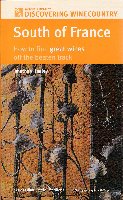
Discovering Wine Country: South of France


Discovering Wine Country: South of France
Jonathan Healey

‘An abundance of entertaining information, wine and otherwise – a useful book for armchair travellers too’   DECANTER

‘An informed and delectable tour – even the connoisseur would be strongly advised to read this guide’   FRENCH MAGAZINE


The essential guide to understanding and exploring the best wines from southern France.

. Part of Mitchell Beazley’s Discovering Wine Country series
. Highlights wine tours of popular and lesser-known regions
. Details of top producers and tourist attractions
. Expert recommendations help you choose top wines
. Guidance on getting wine home safely
. Useful tips on local culture, eating out, where to stay
. Plus advice on the most effective way to travel around
. 140 pages, paperback, published 2005


The Wines of Roussillon


The Wines of Roussillon
Jonathan Healey

'Roussillon has a wine bible'   L'INDEPENDENT

'The essential guide to understanding and exploring the best wines from Roussillon'   LE MIDI LIBRE

'Roussillon produces wines of a variety, originality and quality that it’s hard to imagine another wine region that offers the wine enthusiast such rich and exciting experiences’   From the introduction

. Full details of the region’s wine styles
. A fascinating account of the grapes
. Notes and recommendations on recent vintages
. 50+ of the best chateaux and domains to visit
. The story of Roussillon’s wine-based aperitifs
. An overview of Catalan cuisine and wine accompaniments
. A full calendar of food and wine festivals
. Tips about where to learn more

. 312 pages, hardback/pocket format, published 2002